Three-way Ukraine talks set to resume in November
Moscow has agreed to restart negotiations with Washington and Kyiv, aiming to finalize a postwar security framework after a period of stalled diplomacy.
By Aiko Yamamoto ·
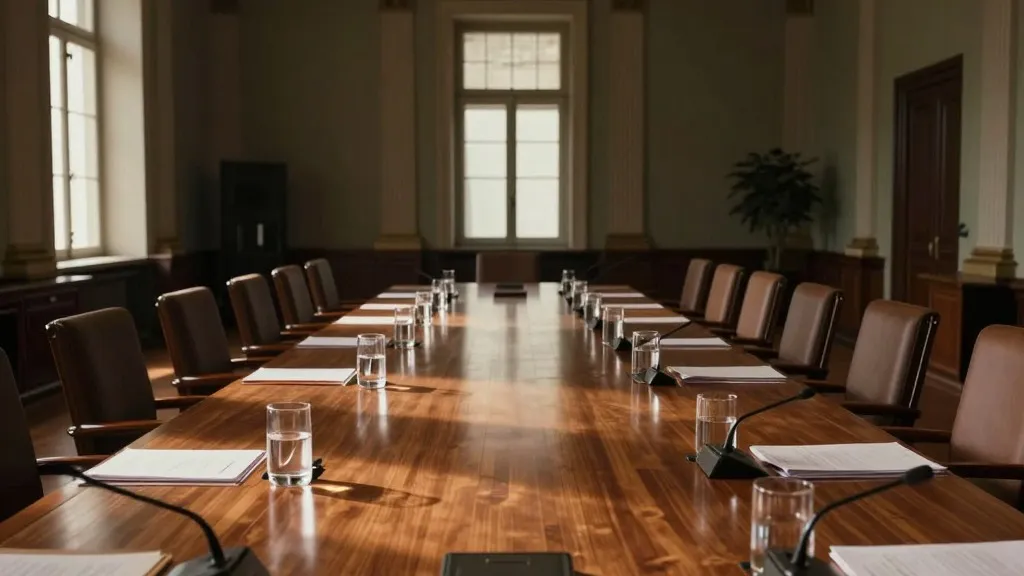
The diplomatic effort to end the war in Ukraine has taken a significant turn as Russia formally agreed to resume trilateral negotiations with the United States and Kyiv. This development marks the first time in several months that all three parties have committed to sitting at the same table, potentially breaking a deadlock that has persisted since earlier this year. The Kremlin confirmed that Russian President Vladimir Putin has approved the restart of these discussions, signaling a willingness to engage in a structured process aimed at ending the conflict.
According to Yuri Ushakov, Putin’s foreign affairs adviser, the agreement to resume talks was reached in principle following a three-hour meeting in St. Petersburg. The discussions are scheduled to begin after November 10. Ushakov stated that the primary objective of these upcoming sessions will be to construct a security system for both Russia and Ukraine once the conflict concludes. This focus on long-term security architecture represents a shift from previous exchanges, which often stalled over immediate territorial and political demands.
The decision to restart talks comes after a series of high-level engagements involving U.S. envoy Steve Witkoff. Witkoff met with Putin at the Constantine Palace in St. Petersburg, where they were joined by Russian presidential envoy Kirill Dmitriev. Trump’s son-in-law, Jared Kushner, participated in the discussion via video link. A U.S. official familiar with the private meeting noted that Witkoff and Kushner proposed a technical-level meeting among the three nations and shared updates from their previous discussions with Ukrainian President Volodymyr Zelenskyy. They also addressed a postwar economic plan and broader European security concerns.
Zelenskyy expressed support for the swift restart of negotiations in an audio message released late Wednesday. He described the agenda as clear, focusing on ending the war and preparing for a potential meeting at the leaders' level. However, his optimism was tempered by recent events. Shortly after his message, missile alerts sounded over Kyiv, accompanied by loud explosions. Zelenskyy noted that while Russia has historically expressed readiness to meet, previous opportunities have sometimes been canceled, leaving Kyiv to watch closely for what happens this time.
The diplomatic momentum is occurring against a backdrop of continued military pressure. Overnight Russian strikes on Kyiv and other cities resulted in five deaths and at least 23 injuries. Ukrainian authorities reported damage to ten residential buildings in the capital, while energy facilities in Kyiv and three other cities were targeted. In Kharkiv, drone strikes on a residential area killed two people and wounded eleven others. The Russian Defense Ministry stated that its forces struck a warehouse, an electrical substation, and a bulk carrier ship en route to Odesa. Additionally, Russian air defenses claimed to have intercepted 373 Ukrainian drones over various regions, including Crimea and the Black Sea.
U.S. President Donald Trump has been actively pushing for a deal, telling reporters at the White House that he wants Zelenskyy to make an agreement with Russia. Trump emphasized the significant support the U.S. has provided to Ukraine and the lack of reciprocal gains, describing the situation as one of grief and monetary loss. He warned that failure to reach a deal could lead to very bad consequences. This pressure reflects the Trump administration's broader strategy to force a resolution more than four and a half years after the war began, despite previous efforts yielding little significant progress.
The diplomatic landscape is further complicated by international relationships. During the St. Petersburg meeting, Putin indicated readiness to discuss the restoration of U.S.-Russia economic ties and the U.S.-led conflict with Iran. Ushakov mentioned that large-scale joint economic projects with significant cooperation prospects were discussed in detail, with some nearing the implementation stage. In a gesture of goodwill, Russia released Stephen Hubbard, a retired American teacher imprisoned on mercenary charges, after Trump asked Putin to free him. Putin also met with Chinese Premier Li Qiang, and the leaders discussed a possible trilateral economic summit in China next month.
Norwegian Prime Minister Jonas Gahr Støre, who met with Witkoff in Oslo after his trip to Russia, suggested that the region may have entered a new phase where Russia is seeking diplomatic opportunities. Støre indicated that the new talks are likely to occur in mid-November. He also commented on the potential for Ukraine to accept a border along the current front line, noting that while formal acceptance might be difficult, practical acceptance is another matter. This nuanced view highlights the complex negotiations ahead as all parties seek a sustainable end to the war.
The resumption of these three-way talks represents a critical test for the peace process. After three rounds of negotiations in Abu Dhabi and Geneva earlier this year yielded little more than prisoner exchanges, the success of the upcoming sessions will depend on the parties' ability to move beyond longstanding demands. The involvement of key figures from the U.S., Russia, and Ukraine, along with the economic and security proposals on the table, suggests that the diplomatic track is gaining traction. As the world watches, the coming weeks will determine whether this latest round of talks can finally bring the conflict closer to a resolution.
Source: Atlanta News First