122 Acres: Amazon's Data Center Retreat in Northern Virginia
Following intense local opposition, Amazon is converting a planned four-data-center complex into residential and mixed-use spaces, while donating land for community arts and recreation.
By Rafael Ortega ·
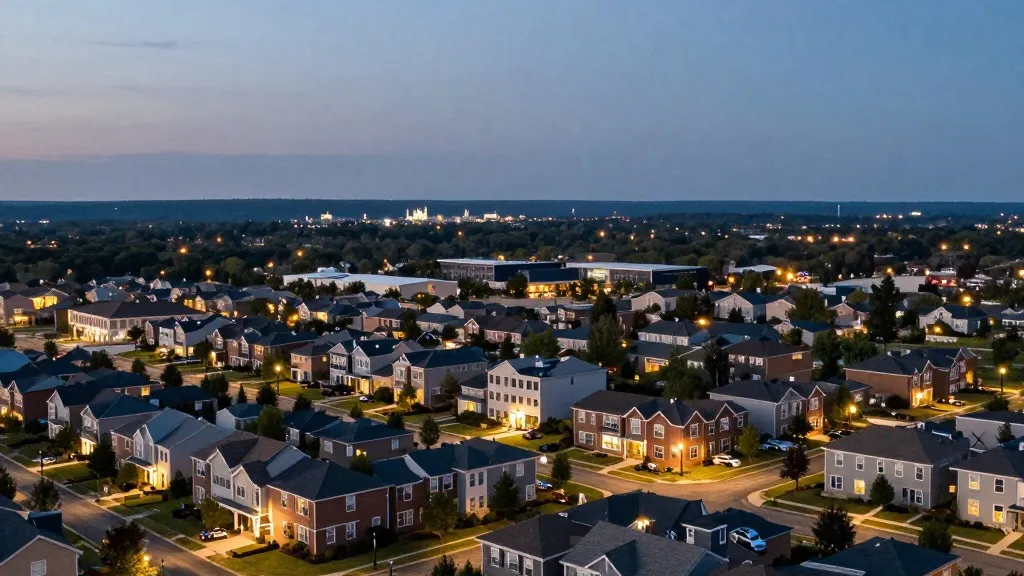
Amazon’s strategic pivot in Loudoun County marks a decisive shift in how hyperscalers negotiate with local jurisdictions regarding artificial intelligence infrastructure. The company has officially abandoned plans to construct four new data centers on a 122-acre site formerly occupied by George Washington University, located just outside Washington, D.C. This withdrawal comes after significant community pushback, signaling that the rapid expansion of AI facilities is no longer immune to local scrutiny over environmental and logistical impacts.
In place of the proposed server farms, Amazon will repurpose the majority of the land for mixed-use and residential development. As part of the settlement, the company will donate 25 acres to Loudoun County for the construction of a community arts center and a new recreational facility. Additionally, Amazon will contribute $5 million to the county’s housing fund. This package represents a substantial departure from the company’s initial proposal, which was submitted in July of this year, and reflects a growing trend of tech giants adapting to local resistance.
Loudoun County, often referred to as "Data Center Alley" due to its high concentration of such facilities, has seen its approach to new buildouts change recently. Residents have expressed deep concern over the noise generated by cooling systems and the massive power demands of these facilities. Phyllis J. Randall, chair of the Loudoun County Board of Supervisors, met with Amazon executives in September to discuss the site, during which county officials suggested the company consider alternative uses for the land. This dialogue eventually led to the current agreement.
Josh Weissman, Amazon’s vice president for data center development, explained that while the company initially saw the property as a strong opportunity, it took the county’s concerns seriously. Weissman noted that although Amazon viewed the legal development potential of the site differently than the county did, both parties concluded that a shared vision was preferable to costly litigation. This collaborative outcome highlights a broader trend where developers are increasingly willing to compromise to avoid protracted legal battles with local governments.
The decision occurs against a backdrop of rising tensions over AI infrastructure. As demand for cloud-based services and AI storage grows, the need for larger facilities has intensified. However, this expansion has triggered opposition from communities worried about electricity price spikes, water usage, and deforestation. Just days before this news broke, President Donald Trump called on data center builders and AI hyperscalers to pay local communities a dividend to offset energy-related price increases. He also proposed that data centers generate their own electricity and sell excess power back to the grid.
County officials have framed the agreement as a win for local residents, emphasizing the benefits of dialogue over confrontation. Randall stated that the agreement provides new spaces for residents to gather and create, while also offering more attainable housing for working families. While critics argue that the region’s power grid capacity is already strained, making new data centers difficult to support, the shift to residential and mixed-use development aligns with the community’s desire for a more balanced land use strategy. This case may serve as a precedent for other regions grappling with the footprint of the AI boom.
The resolution in Loudoun County underscores the evolving relationship between tech giants and local stakeholders. As the AI sector continues to expand, the ability to engage in constructive negotiation rather than litigation may become a key strategy for developers seeking to secure new sites. For now, the former university campus will serve a different purpose, providing housing and community amenities rather than the massive processing power that once seemed inevitable for the region.
Source: Tom's Hardware