Tesla Defers Unsupervised FSD for Private Owners to 2027, Restricting Use to Robotaxi Zones
The automaker’s latest roadmap limits driverless capabilities for customer vehicles to specific geographic areas where its managed fleet already operates.
By Eduardo Salazar ·
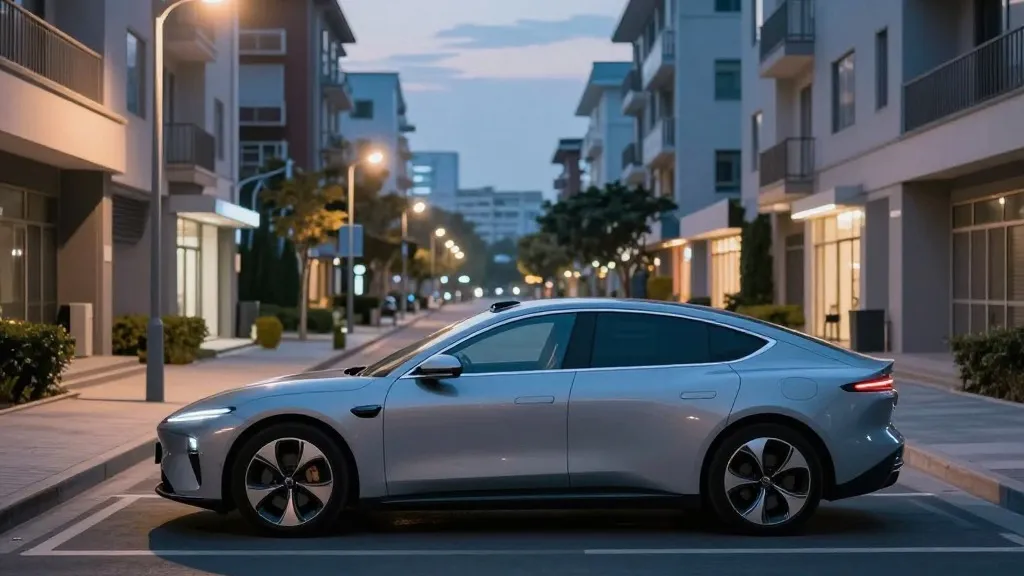
Tesla has officially projected that unsupervised Full Self-Driving (FSD) capabilities for privately owned vehicles will become available in the second quarter of 2027, marking another significant shift in the company’s long-standing autonomous driving timeline. This announcement, made during the Q3 2026 earnings call, represents the latest iteration of a promise CEO Elon Musk has maintained for nearly a decade, though the specific scope of the technology has been narrowed considerably compared to earlier marketing materials.
During the call, Tesla’s AI chief, Ashok Elluswamy, clarified that the rollout will not function as a standalone software update allowing owners to drive anywhere they choose. Instead, the system will operate by integrating customer-owned vehicles into Tesla’s managed Robotaxi network. Under this model, a car will only be capable of unsupervised driving within the specific geographic boundaries where Tesla’s own Robotaxi service is already active, effectively making the private car an extension of the company’s commercial fleet rather than an independent autonomous vehicle.
The timing of this update responds directly to inquiries from retail shareholders, one of whom asked when unsupervised FSD could be expected in customer cars. That question, supported by approximately 1.1 million shares, was among the most prominent topics submitted for the earnings discussion. Elluswamy’s response of Q2 2027 was framed as a phased approach, where the initial step involves adding personal vehicles to the existing Robotaxi infrastructure rather than delivering a universal driverless experience.
However, the geographic reach of this new capability remains limited. Tesla’s Robotaxi service currently operates in six U.S. metropolitan areas, but the service areas within those cities cover only small, specific slices of the total urban landscape. For instance, the Miami zone primarily encompasses West Miami and a corridor extending toward Doral and Sweetwater. Similar limited geofences were established in Orlando and Tampa when those services launched in July of this year.
Operational constraints further define the scope of this technology. Within these designated zones, the vehicles stick to low-speed routes and largely avoid highways and more complex urban environments. In the Bay Area, the service is not yet fully unsupervised; California regulations still require a safety driver in every vehicle because Tesla has not yet released the data required by the California Department of Motor Vehicles to transition beyond a Level 2 autonomous system.
The scale of the current fleet also highlights the distance remaining before a widespread rollout. By the end of Q3 2026, Tesla reported that its Robotaxi service had accumulated nearly two million cumulative unsupervised miles, a figure achieved one month after the Cybercab model joined the fleet in Austin. Third-party tracking from earlier this spring indicated that only dozens of fully driverless Teslas were on the road, a number far below the hundreds of thousands previously discussed by Musk. Competitor Waymo, which entered Orlando and Tampa before Tesla, has already surpassed three million miles in its service.
This development contrasts sharply with the original pitch to FSD buyers, who were led to expect a car that would eventually drive itself anywhere through a simple software update. In July 2025, Musk told investors that unsupervised FSD would be available for personal use in certain geographies by the end of that year. A year prior, he expressed surprise if the technology was not realized by the following year. Additionally, owners of vehicles equipped with Hardware 3 have been informed that their current computer systems cannot run unsupervised FSD, with no clear upgrade plan provided.
Elluswamy reiterated that safety remains the primary bottleneck for expansion, which explains the company’s current limitation to low-speed roads and simpler environments. He suggested that these safety issues might be resolved by the following year, though he acknowledged uncertainty regarding the exact timeline. The announcement thus shifts the expectation from a universal autonomous commute to a more restricted service where a private car can operate as a Robotaxi only within Tesla-controlled zones.
The move raises questions about the practicality of the system for everyday use. Without access to highways or cross-town routes, the utility of unsupervised driving is confined to residents and workers located entirely within the small, designated service areas. This represents a significant narrowing of the initial vision, where the goal was to provide a car that could drive owners to any destination while they rested.
For Tesla, the Q2 2027 target serves as a concrete, albeit limited, milestone. It signals a transition from broad promises to a specific, managed deployment strategy. While the technology remains a work in progress, the company is now tying the availability of unsupervised features in private cars directly to the maturity and geographic footprint of its commercial Robotaxi operations.
Source: Electrek