Apple Marked 25 Years Since the Launch of the Original iPod
The 25th anniversary of the $399 music player that redefined portable audio and set the stage for modern digital ecosystems.
By Ananya Gupta ·
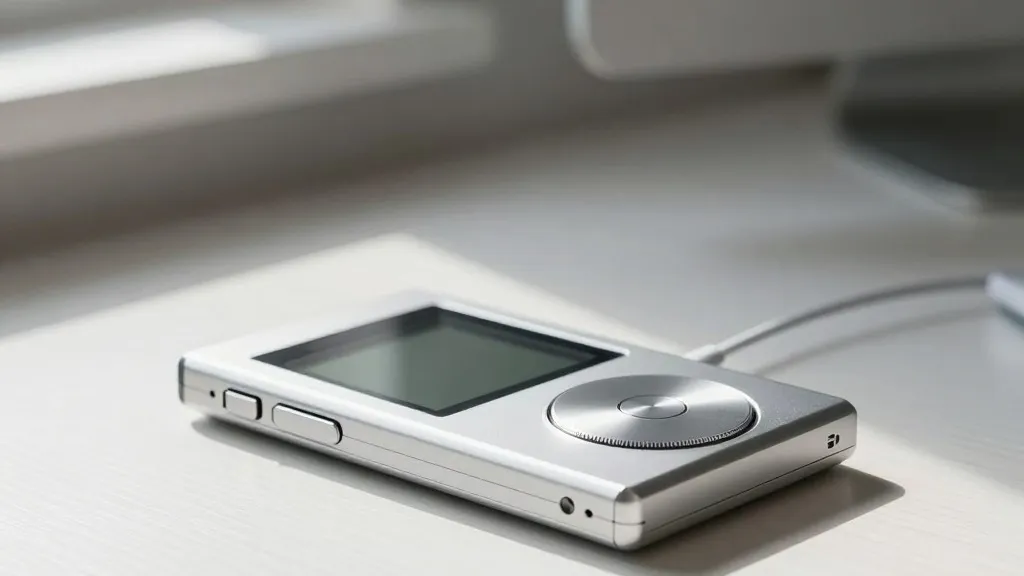
Apple celebrated the 25th anniversary of the original iPod's launch today, marking a quarter century since the device fundamentally altered how consumers interacted with music. The pocket-sized player, which debuted in October 2001, became a cultural phenomenon before smartphones eventually rendered such dedicated hardware redundant. It remains a pivotal moment in consumer electronics history, remembered for its ability to store an entire music library in a package no larger than a deck of cards.
At the time of its unveiling, Steve Jobs had already guided Apple through its post-dot-com recovery with the success of the iMac and iBook lines. Jobs envisioned the Mac as the central hub for all digital media, including cameras and DVD players. He identified portable music as a massive market without a clear leader, despite existing players from companies like Sony, Creative, and Sonic Blue. Jobs argued that none of these competitors had yet discovered the correct formula for digital music, a gap Apple intended to fill.
The device was introduced as an MP3 player capable of handling WAV and AIFF formats with CD-quality sound. Its 5GB storage capacity was the headline feature, allowing users to carry 1,000 songs. Jobs emphasized that this equated to the entire music collection for most people. The hardware relied on a new 1.8-inch ultra-compact hard drive from Toshiba, which was only 0.2 inches thick. This technology enabled the iPod to measure 2.4 by 4 by 0.78 inches and weigh just 6.5 ounces, making it lighter than many cell phones of the era.
Connectivity was a major selling point, with the device boasting a FireWire 400 connection. Jobs claimed this allowed for the transfer of an entire CD of music in as little as five to ten seconds. In contrast, USB transfers at the time could take up to five minutes for the same data. Filling the entire 5GB drive with 1,000 songs would take approximately ten minutes via FireWire, whereas USB devices might require five hours. The player also included 20-minute skip protection and a rechargeable lithium-polymer battery that provided 10 hours of playback and recharged to 80% in an hour.
Design and usability were central to Apple's strategy. The device featured a minimal, durable exterior and a scroll wheel with a piezoelectric clicker for tactile feedback. This control system allowed for one-handed navigation through playlists, artists, and individual songs. During the launch presentation, Jobs demoed the device by playing 'Building a Mystery' by Sarah MacLachlan. The hardware was paired with the release of iTunes 2, which introduced MP3 CD burning and Auto-Sync features that kept the portable player aligned with the user's computer library.
The first iPod coexisted with the iPhone, which launched in early 2007, for over a decade. While the smartphone eventually overshadowed the dedicated music player, the iPod line continued until the final 7th-generation iPod Touch model appeared in May 2019. Although the product line was left without updates for several years, Apple officially discontinued it in May 2022, closing a chapter that began with a $399 device that promised to put a thousand songs in your pocket.
Source: Tom's Hardware