Musk claims chip suppliers are rushing deliveries for new Texas factory
Tesla and SpaceX aim to begin mass-producing advanced chips in 2028, a timeline executives describe as aggressive but achievable.
By Andrew Fletcher ·
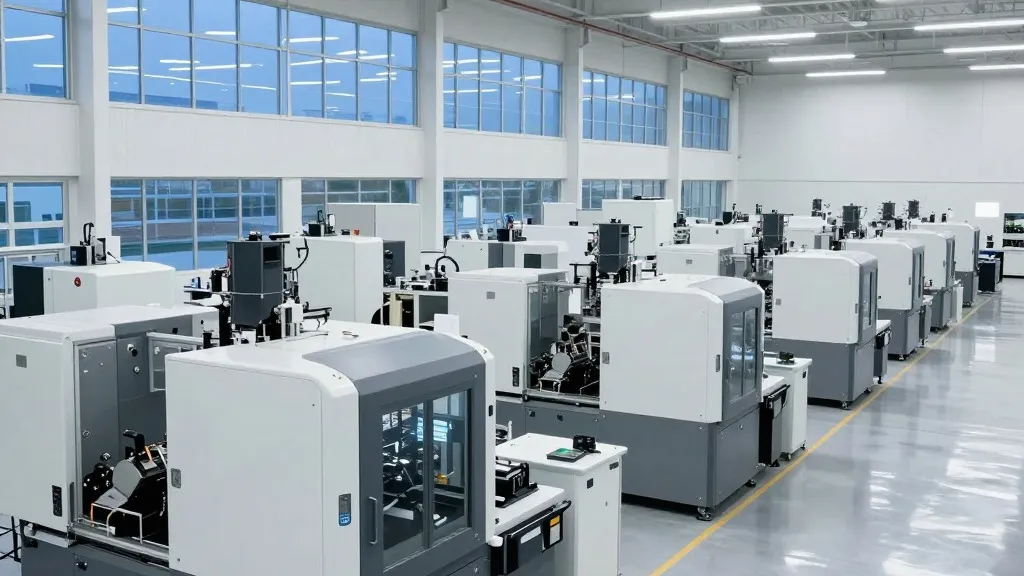
The semiconductor industry is witnessing a significant acceleration in production schedules, driven by the ambitious joint venture between Tesla and SpaceX. This move signals a major shift in how critical chip-making equipment is allocated to new, high-stakes manufacturing projects in the United States.
During a live broadcast of the SpaceX earnings call on October 20, Elon Musk announced that key suppliers, including ASML, have agreed to expedite shipments for the Terafab facility. The company intends to begin volume chip production at its primary site in Gibbons Creek, Texas, by the third or fourth quarter of 2028. Musk characterized this schedule as highly aspirational, noting that it carries significant margins of uncertainty, yet he expressed gratitude for the suppliers' cooperation in meeting these aggressive targets.
The Terafab project represents a multi-billion-dollar, vertically integrated manufacturing complex designed to produce one terawatt of AI computing power annually. The facility will handle logic, memory, and advanced packaging all under one roof, utilizing Intel’s 14A manufacturing node technology. This approach relies on traditional extreme ultraviolet lithography systems, for which ASML remains the sole commercial provider. While the first EUV tool was previously expected for delivery in mid-2027, it is currently unclear if this date has been moved up as part of the recent expedited timeline.
Beyond the core lithography equipment, the project involves a broad network of international partners. American firms such as Applied Materials, Lam Research, and KLA Corporation, along with Japan’s Tokyo Electron, will supply front-end processing and metrology machinery. Additionally, Tesla and SpaceX are in negotiations with approximately ten South Korean manufacturers, including Hanmi Semiconductor and HPSP, for specialized packaging and annealing equipment.
Musk outlined the commercial potential of the venture, suggesting that once fully operational, the output value of Terafab would place it among the top 20 global economies by GDP. For perspective, the 20th-largest economy, Switzerland, has a GDP of approximately $1.14 trillion. The facility aims to reduce reliance on external foundries like TSMC by supplying chips for xAI clusters, Tesla’s autonomous vehicles, Optimus robots, and SpaceX’s orbital data centers.
In related announcements, Musk detailed plans for his AI infrastructure, expecting 2.5 to 3 gigawatts of computing capacity to be active by the end of 2026. He expressed high confidence in adding another 10 gigawatts in 2027, potentially reaching a total of 13 gigawatts by year’s end. To support this growth, SpaceX and xAI are procuring a large cluster of next-generation Nvidia Vera Rubin GPUs, with 440,000 units targeted for deployment by the second quarter of 2027.
Despite the optimism, industry analysts have raised questions about the feasibility of the one-terawatt target. Research firm Gartner estimates that total global AI-optimized data center capacity stands at roughly 44 gigawatts as of late 2026, meaning Terafab’s planned output would exceed the current global total by a wide margin. While EpochAI notes that global AI capacity has grown three to four times since 2022, the scale of Terafab remains an outlier in the current market landscape.
The immediate next step for the project involves the continued ramp-up of equipment deliveries and the finalization of negotiations with remaining suppliers. SpaceX plans to manufacture its first experimental test chip at a research facility in Austin, Texas, around the second quarter of 2027. This pilot production is intended to validate the manufacturing processes before the main facility in Gibbons Creek begins full-scale operations in 2028.
Source: Tom's Hardware